A suitable high pressure hydraulic hose should match the system’s working pressure, temperature, fluid type, flow rate, and installation conditions. Industrial hydraulic hoses commonly operate between 3,000 and 10,000 psi, while some heavy equipment systems exceed 15,000 psi. Selecting a hose with the correct reinforcement structure, pressure rating, and durability can reduce leakage risks and extend service life by more than 50% compared with an unsuitable hose choice.
Industrial hydraulic systems rely on flexible hose assemblies to transfer pressurized fluid between pumps, valves, cylinders, and motors. Unlike rigid piping, hoses allow machine movement and absorb vibration, but they must handle repeated pressure cycles, bending, heat, and external contact. A high pressure hydraulic hose is designed for applications where standard industrial hoses cannot provide enough pressure resistance or fatigue strength.
A hydraulic hose is selected according to the actual working environment, not only the pressure number printed on the hose label.
The first specification to check is working pressure. Hydraulic equipment manufacturers usually provide the maximum operating pressure of the circuit, and the hose rating should be above this value. SAE hydraulic hose standards define different pressure ranges for different constructions. For example, SAE 100R1 single-wire braid hoses may handle several thousand psi, while SAE 100R13 spiral hoses are designed for higher-pressure applications with frequent pressure pulses.
A pressure margin is normally included during selection. If a system operates at 4,000 psi, engineers may choose a hose rated at 5,000 psi or higher to handle temporary pressure increases. A 20–30% pressure reserve is commonly used in industrial applications because hydraulic systems rarely operate at a perfectly constant pressure level.
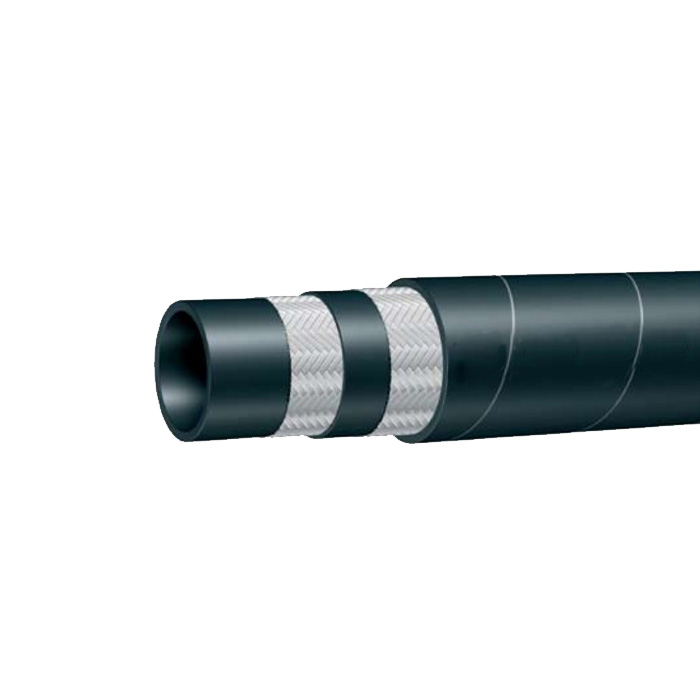
The pressure rating depends heavily on the internal reinforcement structure. Hydraulic hoses usually contain three layers: the inner tube, reinforcement layer, and outer cover. Each layer has a specific function during operation.
| Hose Layer | Main Function |
|---|---|
| Inner tube | Transfers hydraulic fluid and resists chemical attack |
| Reinforcement layer | Handles internal pressure forces |
| Outer cover | Protects against abrasion, weather, and external damage |
Single-wire braid hoses are often used in medium-pressure systems where flexibility is important. Two-wire braid designs provide higher pressure capability and are common in industrial machinery. Spiral wire hoses use several layers of steel wire wrapped in different directions, allowing them to handle stronger pressure pulses.
Pressure cycling is different from static pressure. A hose may survive a pressure test but fail after thousands of repeated cycles. SAE qualification tests often require hoses to complete thousands of impulse cycles under controlled temperature conditions. For equipment such as excavators, presses, and injection molding machines, impulse resistance can determine whether a hose lasts months or several years.
Temperature range must also be considered before choosing a hose. Hydraulic oil temperature in industrial equipment commonly reaches 60–90°C during operation, while some systems run above 100°C. Continuous exposure to high temperatures accelerates rubber aging and reduces flexibility.
Many hydraulic hoses are rated for approximately -40°C to +100°C, but special compounds are available for higher or lower temperature environments. Cold conditions create another problem because rubber materials become harder and less flexible. A hose installed outdoors in northern climates may require a low-temperature cover to maintain bending performance.
The working fluid affects hose material selection. Most industrial hydraulic systems use petroleum-based oils, but some applications use water-glycol, phosphate ester, or biodegradable fluids. A hose that works well with one fluid may deteriorate quickly with another.
Common inner tube materials include nitrile rubber (NBR), which is widely used for petroleum-based hydraulic oils, and EPDM, which provides better resistance to certain chemical fluids. Incorrect material selection can cause swelling, cracking, or loss of strength. In some cases, fluid incompatibility can reduce hose service life by more than 40%.
The hose material must be matched with the hydraulic fluid before installation because appearance alone cannot show chemical compatibility.
Hose diameter affects both system performance and energy consumption. A smaller internal diameter increases fluid speed and pressure loss, which can raise operating temperature. A larger diameter reduces restriction but may increase cost and installation space requirements.
Hydraulic engineers often select hose sizes according to recommended flow velocity ranges. Pressure lines commonly use approximately 4–6 m/s fluid velocity, while return lines generally use lower values. Incorrect sizing may reduce machine efficiency and create unnecessary heat generation.
Installation conditions are equally important. A hose that is correctly rated can still fail early if it is installed with excessive bending, twisting, or abrasion. Manufacturers specify minimum bend radius values because sharp bends place additional stress on reinforcement wires.
For example, bending a hose below its recommended radius by 30% can significantly shorten fatigue life during repeated movement. Mobile equipment requires careful routing because hoses may contact metal edges, moving parts, or hot surfaces.
| Installation Issue | Possible Result |
|---|---|
| Excessive bending | Reinforcement fatigue |
| Twisting during assembly | Reduced pressure capability |
| Contact with sharp edges | Cover damage and leakage |
| Poor clamp position | Vibration-related wear |
Fittings and hose assemblies must also match the application. A high-quality hose connected with an incorrect fitting may create leakage problems at the connection point. Industrial systems commonly use JIC, SAE O-ring face seal, DIN, and flange fittings depending on equipment design.
Crimping accuracy is important during hose assembly. The fitting must be attached according to manufacturer specifications because incorrect crimp dimensions can damage reinforcement layers. Professional hydraulic service providers normally check hose assembly measurements before delivery.
The operating environment determines how often inspection should be performed. Factory hydraulic systems with stable conditions may use longer inspection intervals, while construction and mining equipment require more frequent checks because of vibration, dust, and mechanical movement.
A maintenance inspection usually focuses on several visible conditions:
-
Surface cracks on the outer cover
-
Oil leakage near fittings
-
Exposed steel reinforcement wires
-
Flattened or twisted hose sections
-
Unusual changes in hose flexibility
Industry maintenance data shows that hose-related failures represent a large portion of hydraulic system service issues. In many facilities, leakage and damaged hose assemblies account for around 30–40% of hydraulic maintenance cases.
Storage conditions before installation also influence hose performance. Rubber materials can degrade when exposed to sunlight, ozone, moisture, or extreme temperatures for long periods. Manufacturers generally recommend storing hoses in dry environments away from direct ultraviolet exposure.
Selecting the correct hose requires comparing several specifications together:
| Selection Factor | Typical Range or Requirement |
|---|---|
| Working pressure | 3,000–10,000+ psi depending on equipment |
| Temperature range | About -40°C to +100°C for many industrial hoses |
| Reinforcement | Textile, braid wire, or spiral wire |
| Fluid compatibility | Must match hydraulic oil type |
| Bend radius | Follow manufacturer recommendation |
Different industries have different hose requirements. Construction machinery often needs abrasion-resistant covers because equipment operates in outdoor environments. Manufacturing equipment may prioritize impulse resistance because valves and cylinders cycle thousands of times per day. Mining equipment usually requires heavy-duty spiral hoses because of high pressure and severe mechanical conditions.
For example, a hydraulic press operating continuously in a factory may complete hundreds of thousands of cycles annually. A hose selected only by pressure rating may not perform well if its impulse rating and temperature resistance are insufficient.
The best hose choice combines pressure capability, material compatibility, installation requirements, and expected operating cycles.
Before purchasing a hydraulic hose, engineers should review equipment manuals, hose standards, fluid specifications, and working conditions. Checking only one parameter, such as maximum pressure, does not provide enough information for reliable selection.
A properly selected hose assembly improves equipment uptime, reduces maintenance frequency, and supports safer hydraulic operation. With industrial systems becoming more powerful, hose design and material technology continue to develop to meet higher pressure levels, longer operating periods, and more demanding environments.